
Hurting isn't a reason to stop. It's a reason to change the plan.
Most training aches are load problems, not damage. This is what the research says about each one, what usually makes it worse, what usually helps, and how to keep training while it settles — plus the signs that mean stop reading and go get assessed.
Read this first — when not to train at all.
If any of these apply to you, don't work around it and don't ask an app about it. Get medical attention now.
- Chest pain, pressure or tightness, or breathlessness at rest
- Fainting, blacking out or sudden severe headache
- Numbness, pins and needles or weakness in an arm or leg
- Any loss of bladder or bowel control, or numbness around the groin or inner thighs
- Pain that started with a fall, collision or a snap or pop during a lift
- A joint you cannot put weight on, obvious deformity or rapid swelling
- Pain that wakes you at night, or is clearly worse week after week
- Fever, feeling unwell, or unexplained weight loss alongside joint pain
How to train with an ache.
- 1Sharp, stabbing or radiating pain means stop that set. Not push through it.
- 2Dull, familiar discomfort you can keep controlled — roughly 3 out of 10 or less — is usually workable. Above that, reduce the load or change the movement.
- 3Judge it by the next 24 hours, not just the set. If it's noticeably worse the next morning, that was too much.
- 4Keep moving something. Complete rest for weeks is rarely the answer for ordinary training aches.
- 5Change one thing at a time — load, range, tempo or exercise — so you know what helped.
- 6Nothing here replaces being assessed. Persistent, severe or worsening pain needs a doctor or physiotherapist.
Pick the area.
Lower back
Across the belt line, on one side or both, usually after hinging, deadlifting, squatting or long sitting.
What this pattern is commonly associated with
- • Non-specific lower back pain is the most common presentation in training, and in most cases no single structure can be identified as the cause.
- • It is frequently associated with a sudden jump in loading, volume or frequency rather than with one bad rep.
- • Stiffness that eases with movement and warmth behaves differently from pain that radiates down the leg — leg symptoms need assessment.
Usually makes it worse
- • Heavy hinging with a rounding, shifting spine as fatigue sets in
- • Adding load or volume quickly after time off
- • Long sitting before training with no warm-up
- • Holding the breath and letting the ribcage flare under load
Usually helps
- • Gentle, frequent movement through the day
- • Hinging lighter with a braced, controlled spine and full range
- • Shortening the range temporarily — blocks, rack height, trap bar
- • Building core control in positions that don't load the spine heavily
Stretches for this area
Take these to a gentle stretch, never into pain. If a position provokes your symptoms, skip it.
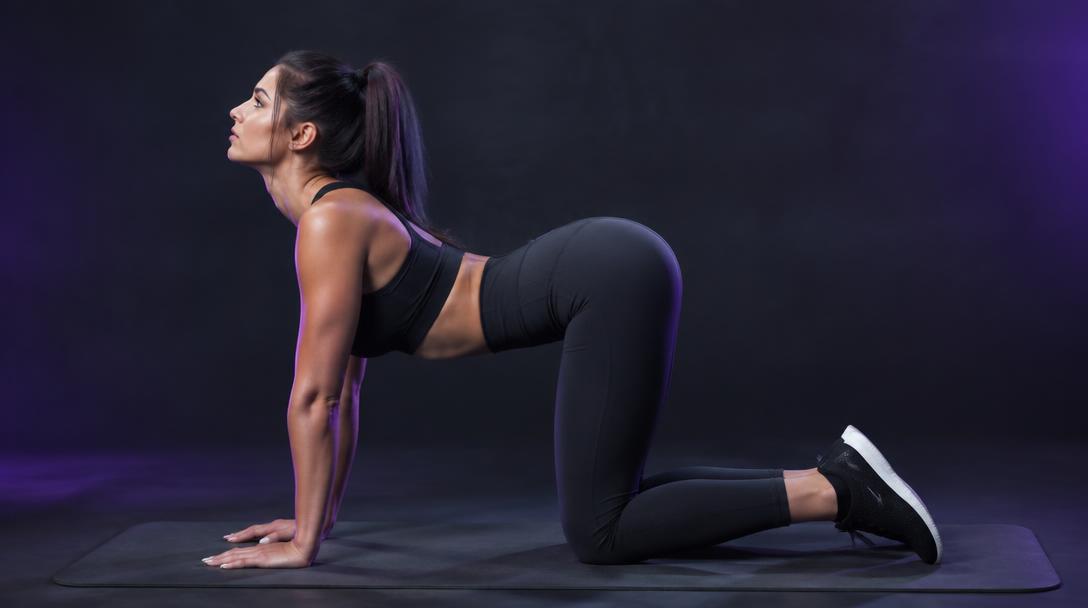
Cat–Cow
10 slow reps
- 1. On hands and knees, exhale and round the spine one segment at a time
- 2. Inhale and reverse into a gentle arch, chest forward
- 3. Move slowly — the goal is segmental control, not maximum shape
Keep it pain-free and mid-range if you have any disc history.
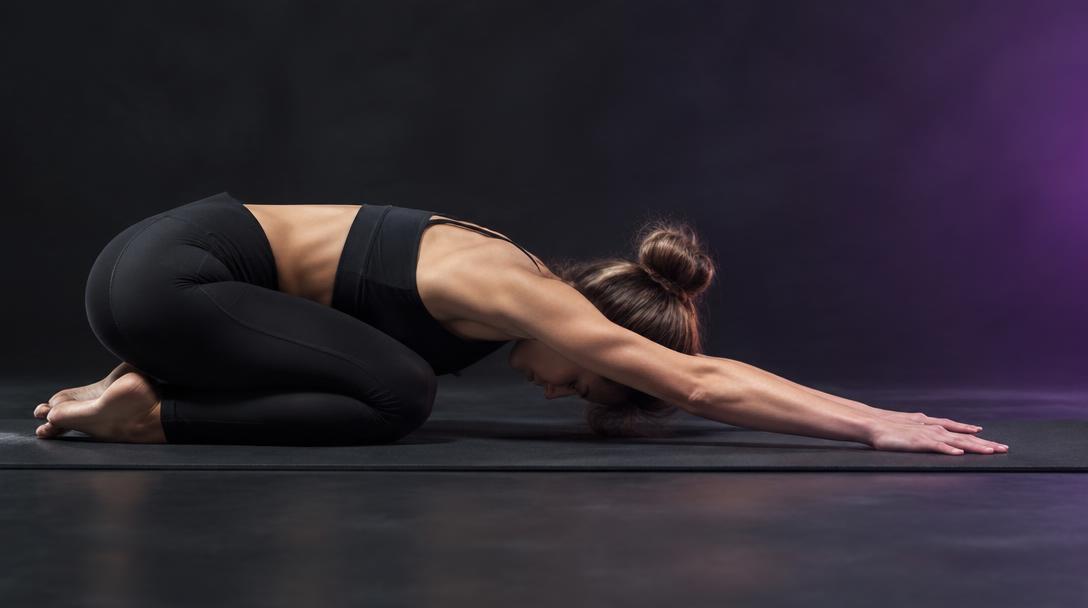
Child's Pose With Side Reach
45–60s per side
- 1. From child's pose, walk both hands to one side
- 2. Press the opposite hip back toward the heel to anchor the stretch
- 3. Breathe into the ribs on the stretched side
Place a cushion behind the knees if the knee flexion is uncomfortable.
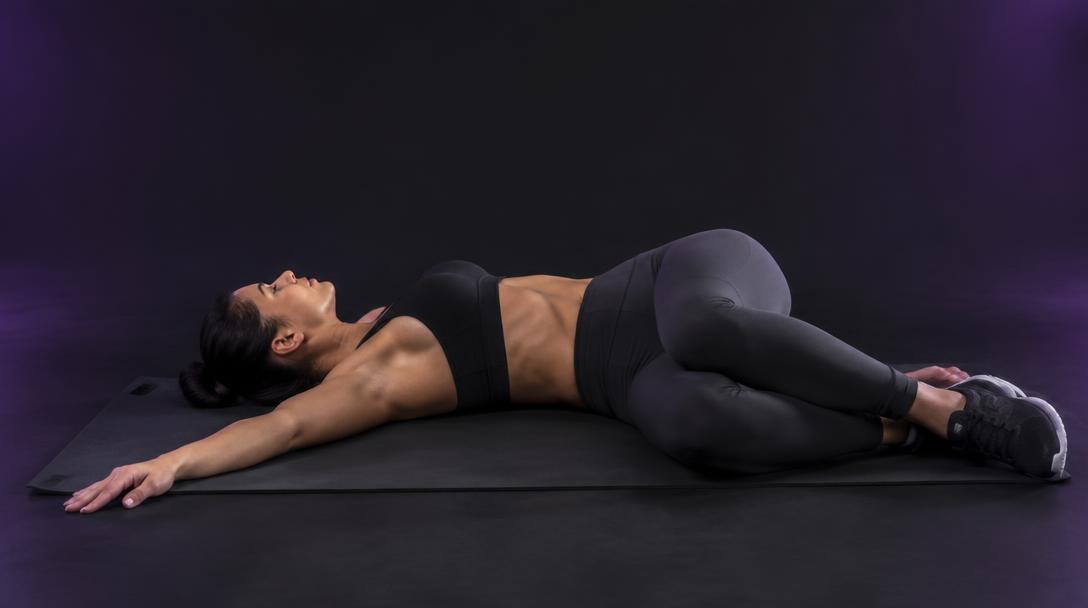
Supine Spinal Twist
45s per side
- 1. Lie on your back, arms out in a T
- 2. Drop both bent knees to one side and turn the head the other way
- 3. Let gravity do the work; relax completely
Support the knees on a cushion if the twist feels forced.
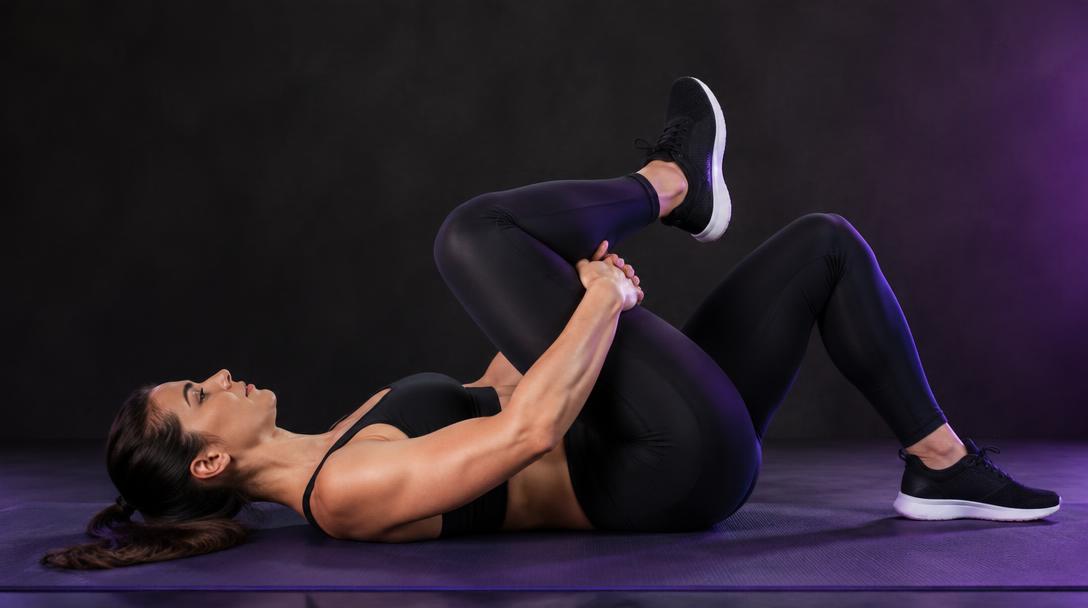
Figure-Four Stretch
30–45s per side
- 1. Lie on your back, cross one ankle over the opposite knee
- 2. Pull the supporting thigh toward the chest
- 3. Keep the crossed knee pushing gently outward and the head relaxed on the floor
Stop if you feel anything sharp or electric down the back of the leg.
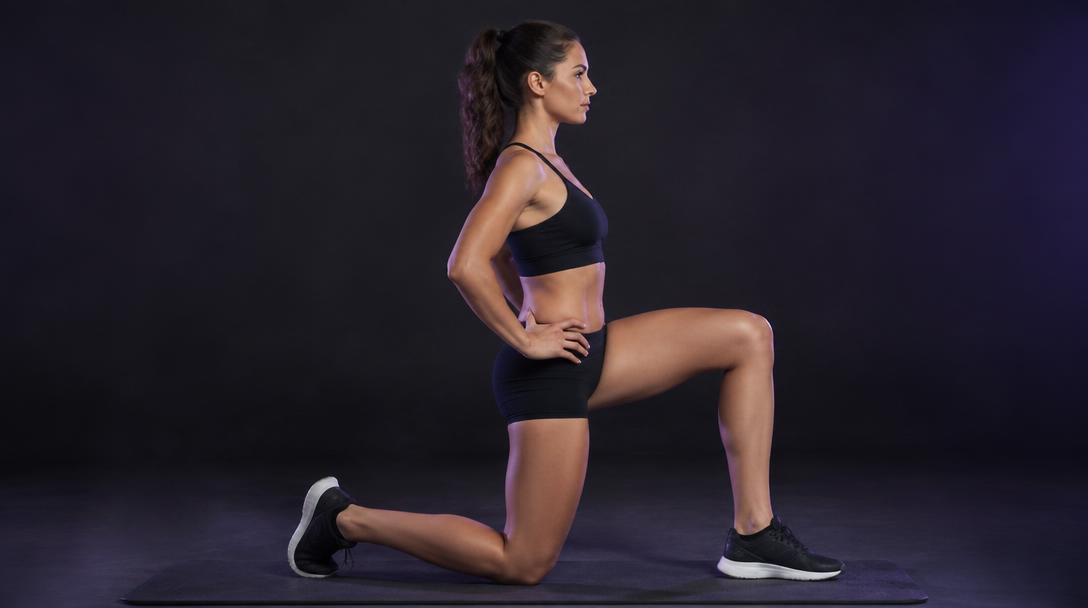
Half-Kneeling Hip Flexor Stretch
30s per side
- 1. Half-kneel with the back knee padded
- 2. Tuck the pelvis under and squeeze the back glute
- 3. Shift forward only an inch or two — the tuck creates most of the stretch
If you feel it in the lower back, you are arching instead of tucking.
Keep training — swap, don't stop
More upright torso, less shear demand on the back for the same training effect.
The load sits in front and lighter, so the trunk works without heavy spinal loading.
The bench takes the trunk out of it while you keep training your back.
Trains bracing without loaded rotation of a sore spine.
Recovery advice
- • Relative rest, not bed rest: keep walking daily and keep training the rest of your body.
- • Drop hinge load to something you can control with clean technique, then rebuild gradually.
- • Prioritise sleep — short sleep consistently makes pain feel worse.
- • Warm up the hinge properly: hips, mid-back and glutes before the first working set.
How long this usually takes
Ordinary training-related back pain often settles noticeably within a few weeks of sensible loading. If it isn't clearly improving, or it travels down the leg, get assessed.
Ask the coach about this
The AI Coach will research the question, cite what it's based on and build training around your profile. It will never diagnose you or tell you it's safe to train — that's a clinician's call.
Ask: “I get lower back pain after deadlifts. What does the research actually say about it, and how should I train around it?”Sources
This page is general education about training with everyday aches. It is not a diagnosis, not a treatment plan, and not a substitute for being assessed. Nobody can identify the cause of your pain without examining you. If your pain is severe, persistent, worsening, follows an injury, or comes with any of the warning signs listed above, see a doctor, physiotherapist or other licensed clinician.
- 1Foster et al. (2018) — Prevention and treatment of low back pain: evidence, challenges and promising directionsThe Lancet (Low Back Pain Series)
- 2Pieters et al. (2020) — Exercise therapy for rotator cuff related shoulder pain, systematic reviewJournal of Orthopaedic & Sports Physical Therapy
- 3Collins et al. (2018) — Patellofemoral pain consensus statement: management recommendationsBritish Journal of Sports Medicine
- 4Cook & Purdam (2009) — Continuum model of tendon pathology and load managementBritish Journal of Sports Medicine
- 5Gabbett (2016) — The training-injury prevention paradox: training smarter and harderBritish Journal of Sports Medicine
- 6Finan, Goodin & Smith (2013) — The association of sleep and pain: an updateThe Journal of Pain
- 7ACSM position stand (2009) — Progression models in resistance training for healthy adultsMedicine & Science in Sports & Exercise
- 8Physical Activity Guidelines for Americans, 2nd editionU.S. Department of Health and Human Services