





All abs & core exercisesAbs & Core · Calisthenic
Mountain Climber
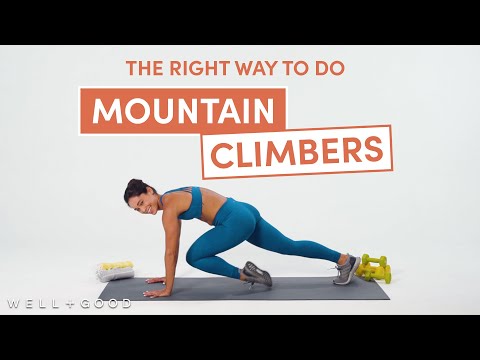
A plank with alternating knee drives — core stability with a conditioning effect.
BeginnerBodyweight3 × 30–45 s
CoreBodyweight
Mountain Climber
Demo · Well+Good
How to do the Mountain Climber
- 1Hands under shoulders
- 2Hips level with the shoulders
- 3Drive knees toward the chest
- 4Keep a steady rhythm
Benefits of the Mountain Climber
- Builds strength and size in the core through a full, controlled range of motion
- Also trains shoulders, hip flexors as supporting movers
- Needs no equipment — trainable at home, outdoors or while traveling
- Low skill demand — safe to learn early and useful for high-rep volume
Sources
Exercise information is provided for general educational purposes. Choose movements appropriate for your ability level and stop if you experience pain, dizziness, unusual shortness of breath or other concerning symptoms. Seek appropriate medical or fitness guidance when needed.
- 1Behm et al. (2016) — Acute effects of stretching on range of motion and performanceApplied Physiology, Nutrition, and Metabolism
- 2McGill (2010) — Core training: evidence translating to better performance and injury preventionStrength and Conditioning Journal
- 3Schoenfeld, Ogborn & Krieger (2017) — Dose-response of resistance training volume on hypertrophyJournal of Sports Sciences
- 4ACSM position stand (2009) — Progression models in resistance training for healthy adultsMedicine & Science in Sports & Exercise
- 5Physical Activity Guidelines for Americans, 2nd editionU.S. Department of Health and Human Services